
Logistics Knowledge Base
What is 3PL?
The comprehensive guide to Third-Party Logistics. Learn how outsourcing your supply chain can lower costs, increase speed, and help you scale globally.
The comprehensive guide to Third-Party Logistics. Learn how outsourcing your supply chain can lower costs, increase speed, and help you scale globally.
3PL, short for Third-Party Logistics, refers to the outsourcing of e-commerce logistics processes to an external partner. This partner manages your supply chain operations, allowing you—the merchant—to focus on your core competencies like product development, marketing, and sales.
Unlike managing a private warehouse, partnering with a 3PL provider gives businesses access to enterprise-grade infrastructure without the heavy capital investment (CapEx). A 3PL doesn't just store your boxes; they become the engine room of your business, handling everything from the moment inventory leaves the factory to the moment it arrives at your customer's doorstep.
"Modern 3PLs are not just storage units. They are technology companies that move physical goods, providing real-time data integration with platforms like Shopify, Amazon, and Walmart."
Today's leading 3PLs offer integrated technology, real-time inventory tracking, returns management (reverse logistics), and freight forwarding services (zone skipping) to optimize shipping costs.

Every item is scanned and tracked for 99.9% inventory accuracy.
While every provider has nuances, the standard global 3PL workflow consists of five critical operational pillars that ensure your customer gets the right product on time.
Inventory arrives at the warehouse. It is inspected for damages, verified against packing slips, and scanned into the Warehouse Management System (WMS). This step is crucial for inventory accuracy.
Goods are stored in optimized locations (bins, shelves, or pallets). Smart 3PLs use "velocity slotting"—placing best-sellers near packing stations to speed up processing.
When an order drops from your store, a "pick list" is generated. Workers pick items using handheld scanners. Accuracy here prevents costly returns and bad reviews.
Items are securely packed using dunnage (bubble wrap, air pillows) to prevent damage. The system selects the smallest possible box to reduce "Dimensional Weight" shipping costs.
Labels are generated (DHL, UPS, FedEx). Tracking numbers are instantly pushed back to your store (Shopify/Amazon) so the customer knows their order is on the way.
The 3PL receives returned items, inspects them for quality, and decides whether to restock, discard, or quarantine them based on your rules.
| Model | Definition | Example | Best For |
|---|---|---|---|
| 1PL (First-Party) | Manufacturer delivers directly to the customer using their own fleet. | Local bakery delivering bread. | Local businesses. |
| 2PL (Second-Party) | Hiring a carrier only for transport. You pack; they drive. | FedEx, Maersk, DHL (transport only). | Bulk shippers. |
| 3PL (Third-Party) | Outsourcing the entire chain: storage, packing, and shipping. | OMAC Global, ShipBob. | Growing E-commerce brands. |
| 4PL (Fourth-Party) | A consultant who manages multiple 3PLs for you. | Accenture, Deloitte (Supply Chain Div). | Multinational Corporations. |
Many startups begin with "self-fulfillment" from a garage. However, as you scale, the hidden costs (time, space, errors) start to eat into your margins. Here are the signs it's time to outsource:
You are shipping more than 100 orders/month and can't focus on marketing.
Your office or home is overflowing with boxes. You need scalable storage.
You want to sell in Europe/USA but don't know how to handle customs and taxes.
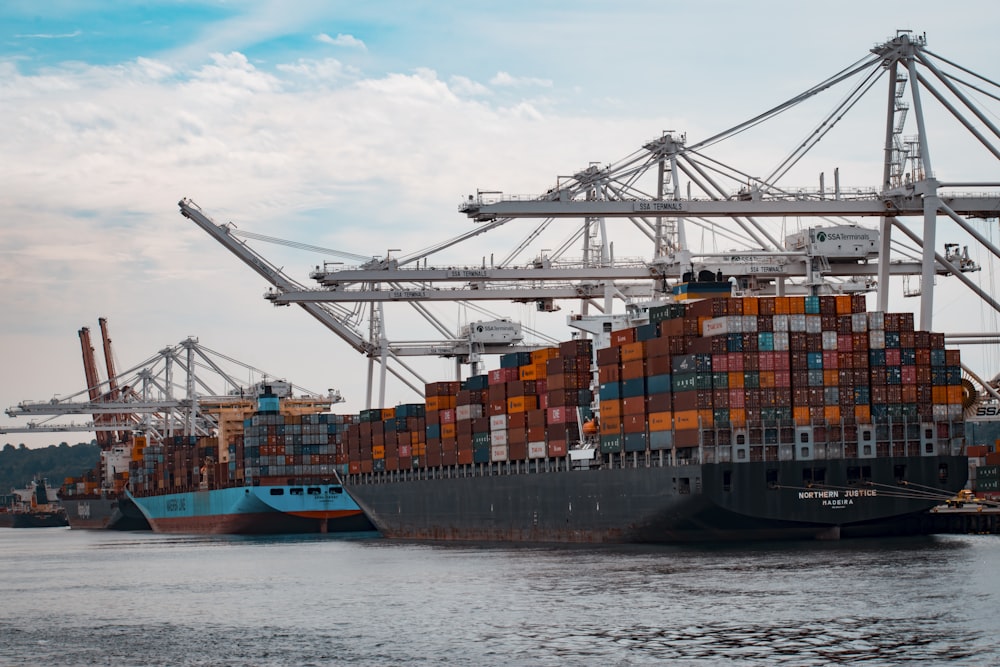
Most 3PLs are just logistics companies. We are E-commerce Sellers who built a logistics network. We solve problems because we've lived them.
We have served over 1 million of our own customers. We understand the panic of a late shipment or a bad review. We treat your packages like our own.
With owned facilities in Texas (USA), Germany, and France, we eliminate "Zone Skipping" costs. Sell in both US and EU markets from a single dashboard.
We use Oracle NetSuite, an enterprise-grade ERP. This means 100% real-time data sync, no overselling, and seamless integration with Shopify, Amazon, & eBay.